
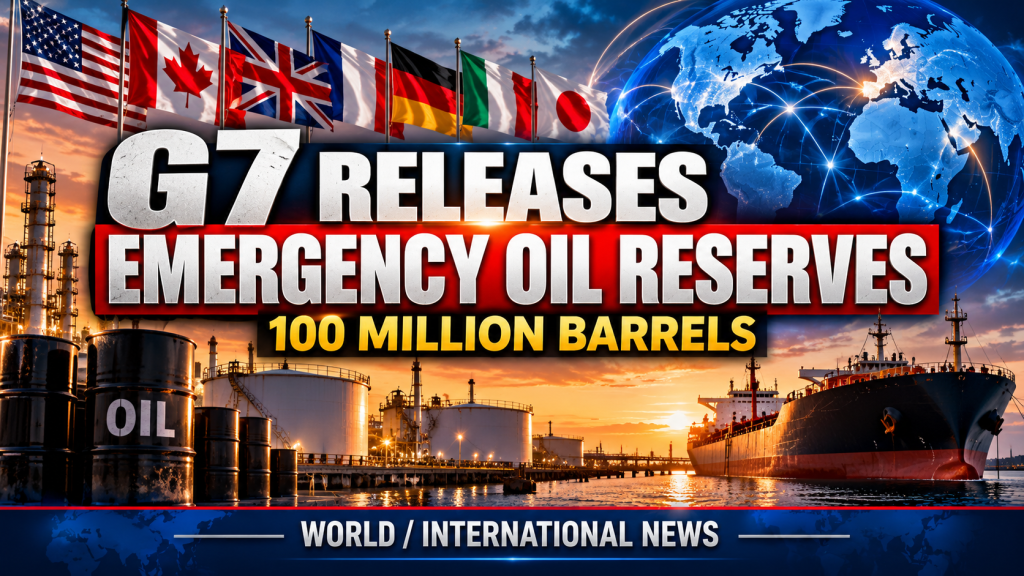
G7 Nations Agree to Release 100 Million Barrels From Emergency Oil Reserves
BRUSSELS — October 2, 2026 | Patriots First Media
The world’s leading industrialized democracies have agreed to release 100 million barrels of diesel and crude oil from emergency reserves, an international effort aimed at easing pressure on energy supplies and fuel prices.
The Group of Seven — the United States, Canada, United Kingdom, France, Germany, Italy and Japan — reached the agreement Friday following discussions over tight global energy supplies. The countries also pledged to avoid imposing energy export restrictions.
Why Countries Are Tapping Emergency Reserves
Emergency petroleum reserves are designed to protect countries against serious disruptions in oil and fuel supplies.
Releasing those reserves increases the amount of oil and diesel available to the market, with the goal of reducing shortages and helping stabilize prices.
The agreement calls for the 100 million barrels to be released over approximately four months.
Global Energy Prices Affect More Than Gas Stations
Oil and diesel prices have effects throughout the worldwide economy.
Diesel fuels trucks, agricultural equipment, construction machinery and other commercial transportation. Petroleum also remains critical to international shipping and aviation.
When transportation costs increase, businesses can face higher expenses moving food, merchandise and raw materials around the world. Some of those costs can ultimately reach consumers through higher prices.
International Cooperation on Energy Supplies
The decision represents a coordinated response rather than individual countries acting independently.
The G7 countries also agreed to refrain from energy export restrictions as governments attempt to keep fuel moving through international markets.
The development will now put attention on global oil and diesel markets to see whether the additional supply produces sustained relief in energy prices.
Why Americans Should Watch This Story
Although this is an international energy story, its effects could reach American households.
Oil is traded on a global market, meaning disruptions or shortages overseas can influence prices in the United States.
Fuel costs can also affect the price of trucking, airline travel, farming, manufacturing and shipping.
For consumers, the numbers worth watching in the coming weeks will be crude oil prices, diesel prices and gasoline prices as the emergency supplies begin entering the market.
Patriots First Media will continue following developments in global energy markets and their potential impact on American consumers.
Patriots First Media | World / International News | October 2, 2026
Article discussion