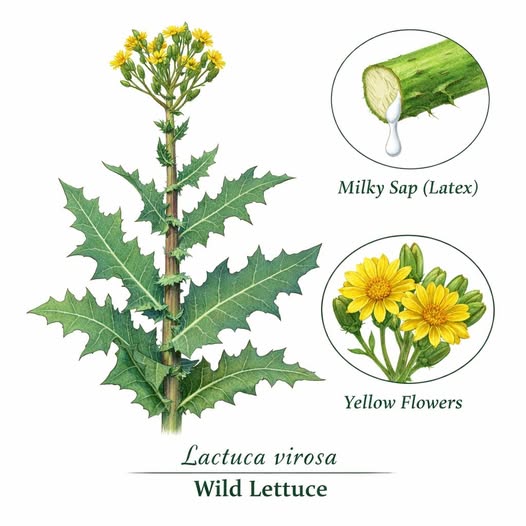
Wild Lettuce (Lactuca virosa)
Family: Asteraceae
Common names:
wild lettuce, opium lettuce, bitter lettuce, poisonous lettuce
Called “opium lettuce” due to similar but weaker effects (as opium). Used in the 1800s when opium was unavailable.
Native to:
Europe, Western Asia, and North Africa. Now naturalized in North America and other temperate regions
Parts Used:
leaves, stem, latex (lactucarium) – most historically valued
Lactucarium is the milky sap of the plant released when the stem is cut. Dried is called “lettuce opium”
Its compounds are responsible for:
- sedative effects
- pain-relieving effects
Latex was used in syrups and lozenges.
Properties of wild lettuce:
analgesic (pain-relieving), sedative, mild hypnotic (sleep-supportive), antitussive (cough calming), antispasmodic, mild bitter
Traditional Uses
Pain (mild to moderate)
Animal studies confirm analgesic activity
Sleep & Nervous System
Traditionally used as a mild sedative nervine for restlessness, nervous irritation and insomnia.
Respiratory
Used for its antitussive (cough-calming) effect-dry cough, irritated airways
Digestive / Other
Mild laxative effects reported
Used historically for spasmodic conditions
Preparations:
tincture/extract, dried latex (lactucarium), infusion, fresh plant preparations (more active but riskier). Fresh wild lettuce is stronger because the active compounds in the milky sap are intact. This also makes it less predictable and easier to overdo, so dried or prepared forms are generally safer to work with.
Potency varies widely depending on preparation.
Many herbs are stronger when fresh, but not all. Some lose potency when dried, some become more stable, and some change their effects entirely. Fresh forms can be more potent but also less predictable.
Often combined with relaxing nervines (for calming effect), mild sedatives, cough-support herbs.
Rarely used alone in traditional practice due to variability and potency
Scientific Research
1. Sedative & sleep effects
- Compounds like lactucin and lactucopicrin in the milky sap (latex):
o show sedative effects
o interact with GABA (a neurotransmitter that promotes relaxation)
o promote sleep in animal models
2. Analgesic effects
- Studies show:
o reduced pain response in animals
o effects comparable to mild analgesics
3. Additional properties
- Antioxidant activity
- Possible effects on inflammation and how nerves communicate
Precautions
This is not a gentle herb like mallow or nettle.
Reported side effects include dizziness, anxiety, dilated pupils, urinary retention, hallucinations (with high doses), cardiovascular effects.
Documented cases of toxicity exist.
Potency increases with maturity of plant.
Not well studied in humans, dose variability (esp. fresh), stronger effects than expected.
Wild lettuce is a historically used sedative and pain-relieving herb with real pharmacological activity, but variable potency and safety concerns limit its use.