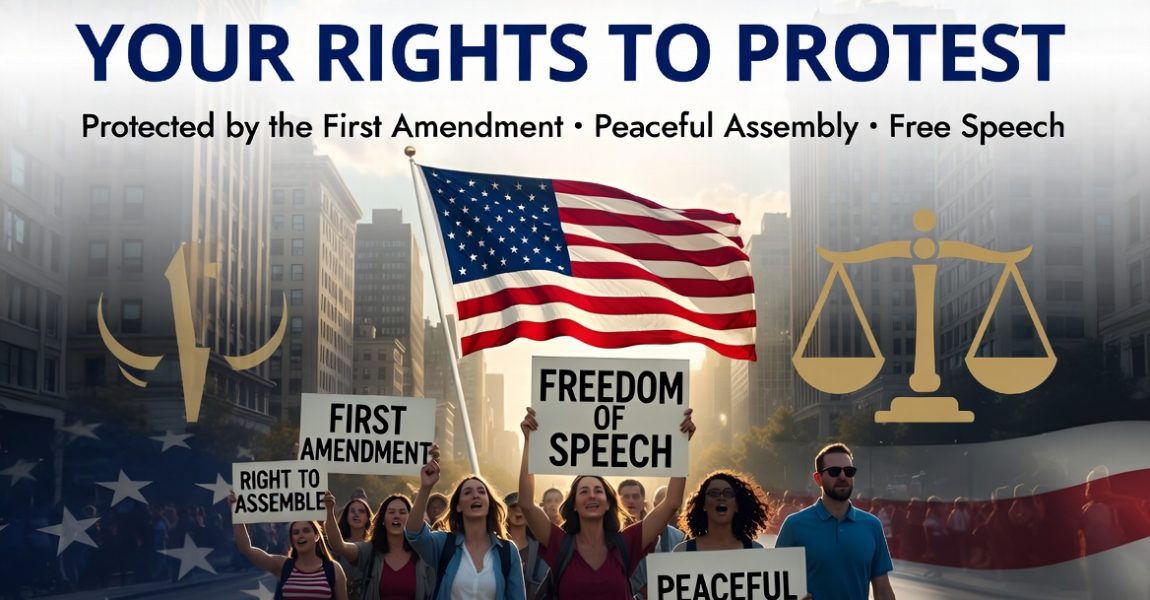
Your rights while protesting in the streets are primarily protected by the First Amendment to the U.S. Constitution, which safeguards freedom of speech, assembly, and the right to petition the government for redress of grievances. These rights allow peaceful protests in public spaces, but they are not unlimited. Government officials (including police) can impose narrow, content-neutral restrictions for public safety, traffic control, or other legitimate reasons.
aclu.org This is general information based on federal constitutional principles and guidance from sources like the ACLU (updated as of January 2026). Laws, ordinances, and enforcement vary significantly by state, city, and even specific location. What is legal in one place may not be in another (e.g., permit rules or noise restrictions). This is not legal advice—consult a lawyer, local ACLU affiliate, or official city/county resources for your area. Always prioritize safety and de-escalation. Where Your Rights Are Strongest Your rights are strongest in “traditional public forums” like streets, sidewalks, and parks. You can also protest in other public spaces (e.g., plazas in front of government buildings) as long as you do not block access or interfere with the space’s intended use. Private property owners can restrict speech and trespass you if you refuse to leave. aclu.org
What You Can Legally Do
- Assemble and express views peacefully: Carry signs, chant, sing, march, hold vigils, or engage in symbolic speech (e.g., wearing costumes or holding candlelight events), as long as it remains non-violent.
- March on sidewalks or streets without a permit (in many cases): No permit is needed if you stay on sidewalks, obey traffic/pedestrian signals, and do not obstruct traffic or block passersby. Police may ask you to move aside for safety or to let others pass, but you generally do not need advance approval for spontaneous or small protests. aclu.org
- Distribute leaflets, petitions, or literature: You can approach people on public sidewalks without a permit, as long as you do not block entrances, physically detain people, or obstruct pedestrian flow. Tables may require a permit in some places.
- Picket orderly: On public sidewalks, as long as it is non-disruptive and leaves space for others.
- Film or photograph: In public spaces (including police officers performing duties), you have a First Amendment right to record anything in plain view. Officers generally cannot confiscate your device or delete footage without a warrant.
- Counter-protest: Opposing groups have equal rights. Police must treat both sides equally and can separate them for safety but must allow them to remain within sight and sound of each other.
- Remain silent and request a lawyer: If stopped or arrested.
What You Cannot Legally Do (or Major Restrictions)Protests must remain peaceful. The First Amendment does not protect violence, threats, or illegal acts, even if they are expressive.
freedomforum.org
- Violence, property damage, or threats: Assault, vandalism, looting, arson, throwing objects, or inciting “imminent lawless action” (per Supreme Court standards) can lead to arrest. You can be held accountable for your own actions or, in some cases, for directing others.
- Block traffic, sidewalks, or access indefinitely without authorization: Large marches that block streets or require road closures often need permits. Blocking emergency vehicles, building entrances, or normal traffic/pedestrian flow can result in citations or arrests.
- Ignore lawful orders: If police issue a valid dispersal order (only allowed as a last resort when there is a clear and present danger of riot, disorder, interference with traffic, or immediate public safety threat), you must have a reasonable opportunity to comply, including time and a clear exit path. Failure to disperse after proper notice can lead to arrest.
- Trespass or violate private property rules.
- Violate content-neutral “time, place, and manner” rules: Examples include excessive noise in residential areas at night, local curfews, or restrictions near sensitive sites (e.g., hospitals or schools). These must apply equally regardless of your message.
- Use certain tactics in some states: Some localities have additional rules (e.g., anti-mask laws during protests, restrictions on camping, or amplified sound). Check local ordinances.
Permits: When Required and How They Work
- Small/sidewalk protests: Usually no permit needed.
- Large events: Permits are often required for marches/parades that block traffic, large rallies using sound equipment, or events over a certain size in parks/plazas. Rules vary by city (e.g., some require applications weeks in advance; others allow spontaneous protests in response to breaking news).
- Key protections: Permits cannot be denied based on your viewpoint (even if controversial). Fees must be reasonable, content-neutral, and include waivers for those who cannot afford them. Restrictions on routes or equipment must be necessary for safety/traffic and not overly burdensome. aclu.org
Note: Permit requirements differ by jurisdiction. For example, some cities require them for events over 50 people or any street closure, while others exempt very small groups. Always verify locally. If Stopped, Detained, or Arrested by Police
- Stay calm, keep hands visible, and do not resist or obstruct (even if you believe your rights are being violated).
- Ask: “Am I free to leave?” If yes, walk away calmly.
- If detained/arrested: You can ask why you are being arrested. Otherwise, say you wish to remain silent and want a lawyer. Do not consent to searches.
- Police may pat you down for weapons or search incident to arrest, but they generally need a warrant to view your phone’s contents.
- Dispersal orders must give clear notice, time to comply, and an exit route. aclu.org
If You Believe Your Rights Were Violated Document everything (officer badge numbers, witnesses, photos of injuries). File a complaint with the agency’s internal affairs or civilian review board. You may also have grounds for a civil rights lawsuit. Bottom line: Peaceful street protests are a core protected right, but crossing into illegal conduct (violence, blocking without authorization, ignoring orders) can lead to arrest, charges, or civil liability. Plan ahead, know local rules, and consider legal observers or resources from groups like the ACLU for support. Stay safe and informed—your rights exist to be exercised responsibly.