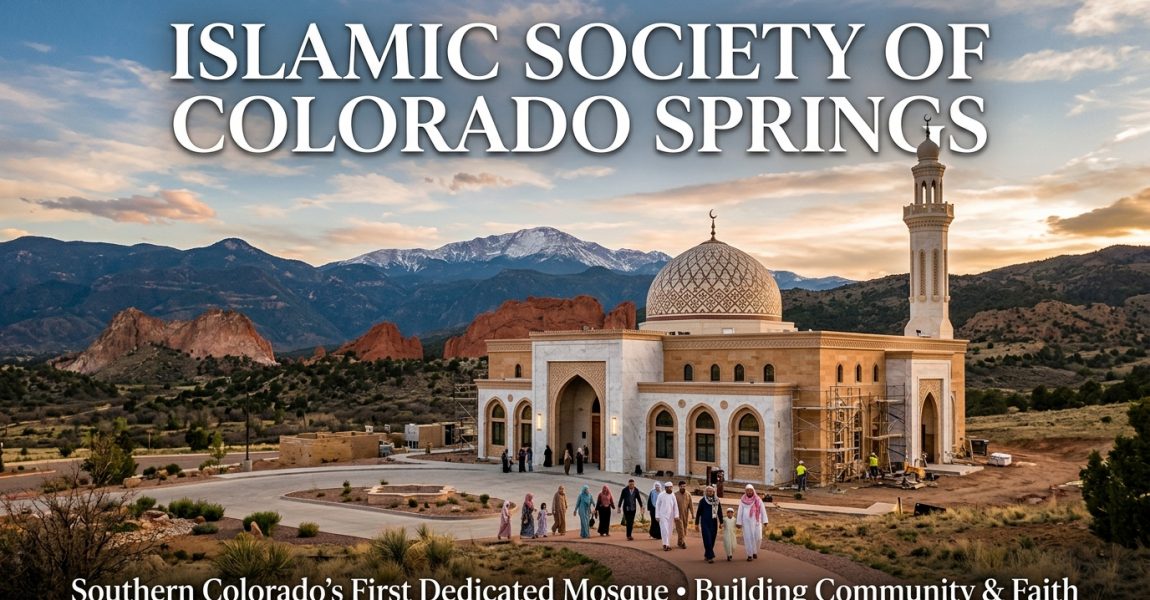
The Islamic Society of Colorado Springs is currently advancing a site development plan to construct a new, multi-phase community center and mosque at 7610 Maverick Road. This facility aims to address the needs of a growing and diverse local Muslim population by providing a large prayer hall, educational classrooms, and social spaces. While the project has received significant public support, it has also faced several formal objections from local residents during the county review process. Beyond the building project, the sources outline the organization’s core religious beliefs and its commitment to interfaith outreach and charitable services. Technical documents specify that the five-acre rural site will utilize well and septic systems while maintaining a design that reflects the community’s cultural identity. These records collectively illustrate the intersection of religious growth and land-use planning within El Paso County’s evolving demographic landscape.
Residents in El Paso County are sharply divided over the proposed Islamic Society of Colorado Springs (ISCS) development on Maverick Road, with strong sentiments of both opposition and support.
Opposition to the Development Between January and February 2026, dozens of residents submitted formal comments to the county’s planning portal expressing their opposition to the project. In February 2026, nearly 20 residents also gathered along Woodmen Road to protest the potential mosque. The opposition stems from a mix of logistical and ideological concerns:
- Ideological Concerns and Fear of “Sharia Law”: Many vocal opponents have framed their resistance around ideological critiques, expressing fears that the mosque will impose “sharia law,” which they claim is incompatible with the U.S. Constitution and threatens women’s rights and gay rights. Some protesters assert that Islam is an “ideology” rather than a religion.
- Fears of Cultural Displacement: Some neighbors have expressed fears that the development will lead to a “takeover” of the local area, drawing parallels to controversies surrounding a large Islamic center development in Plano, Texas.
- Logistical Concerns: On a technical level, some residents have raised concerns about the potential for increased traffic congestion on Maverick Road and Woodmen Road.
The organizers of the protests have stated that community members will continue to oppose the mosque through ongoing protests and prayer events.
Support for the Development Conversely, the proposed masjid has also received a significant wave of support from the community. A large volume of letters and public comments have been submitted to the county’s planning portal in favor of the project. These residents strongly defend the development, emphasizing the constitutional rights of their Muslim neighbors to have a dedicated and permanent place of worship
The proposed Maverick Road mosque project and the local Muslim community have received support from several religious and interfaith organizations in El Paso County, reflecting a growing trend of interreligious cooperation in the area. Specific organizations mentioned in the sources include:
- The Interfaith Alliance of Colorado: This organization has shown solidarity with the Islamic Society of Colorado Springs (ISCS), supporting the Muslim community amidst the friction generated by the new construction.
- Temple Shalom: This local Jewish synagogue is explicitly noted as a supporter of the local Muslim community and actively engages in collaborative interfaith projects with the ISCS.
Furthermore, the ISCS is deeply involved in interfaith solidarity efforts through Pikes Peak Habitat for Humanity’s “Interfaith Build for Unity” program. While not a traditional religious congregation, this initiative brings together volunteers from Christian, Jewish, Buddhist, Hindu, Sikh, and Native American communities to build affordable housing. These collaborative efforts encourage different faith communities to visit each other’s worship centers, fostering a culture of mutual respect and open dialogue that underpins the broader community’s support for the new masjid
The provided sources do not detail specific programs or logistical actions the Interfaith Alliance of Colorado has taken to support the Islamic Society of Colorado Springs (ISCS). However, the text notes that the Alliance stands in solidarity with the ISCS, offering support amidst the friction and public protests generated by the new Maverick Road mosque construction.
This backing helps foster a culture of mutual respect, demonstrating that Colorado Springs is increasingly becoming a “hub of interreligious cooperation” despite its reputation as a center for evangelicalism.
Additionally, the Interfaith Alliance’s broader commitment to the local Muslim community is reflected in its leadership. The organization’s Board of Directors includes Dr. Nabeeh Abdurrahim Hasan, who actively facilitates interfaith efforts, provides cultural competency training, and speaks at “Open Mosque” events to answer questions and address public misconceptions about Islam
Pikes Peak Habitat for Humanity promotes unity primarily through its Interfaith Build for Unity program, which brings together volunteers from diverse religious backgrounds to construct affordable housing.
The organization fosters unity and collaboration in the following ways:
- Collaborative “Sweat Equity”: The program unites volunteers from Christian, Jewish, Muslim, Buddhist, Hindu, Sikh, and Native American communities to work in tandem on building homes. Focusing on the shared, tangible goal of providing affordable housing allows people with different values and religions to connect and form an inclusive community.
- Encouraging Reciprocal Engagement: Working together on construction sites encourages volunteers to build relationships that extend beyond the build itself. Participants become more willing to visit each other’s worship centers, attend diverse community events, and invite members of different faiths to speak at their own congregations.
Building Cultural Bridges: In a predominantly Christian city, these interfaith builds serve as a crucial bridge between minority faith groups—such as the local Muslim community—and the public at large. By working side-by-side, participants help raise awareness, dispel misconceptions, and foster a culture of open dialogue and mutual respect