
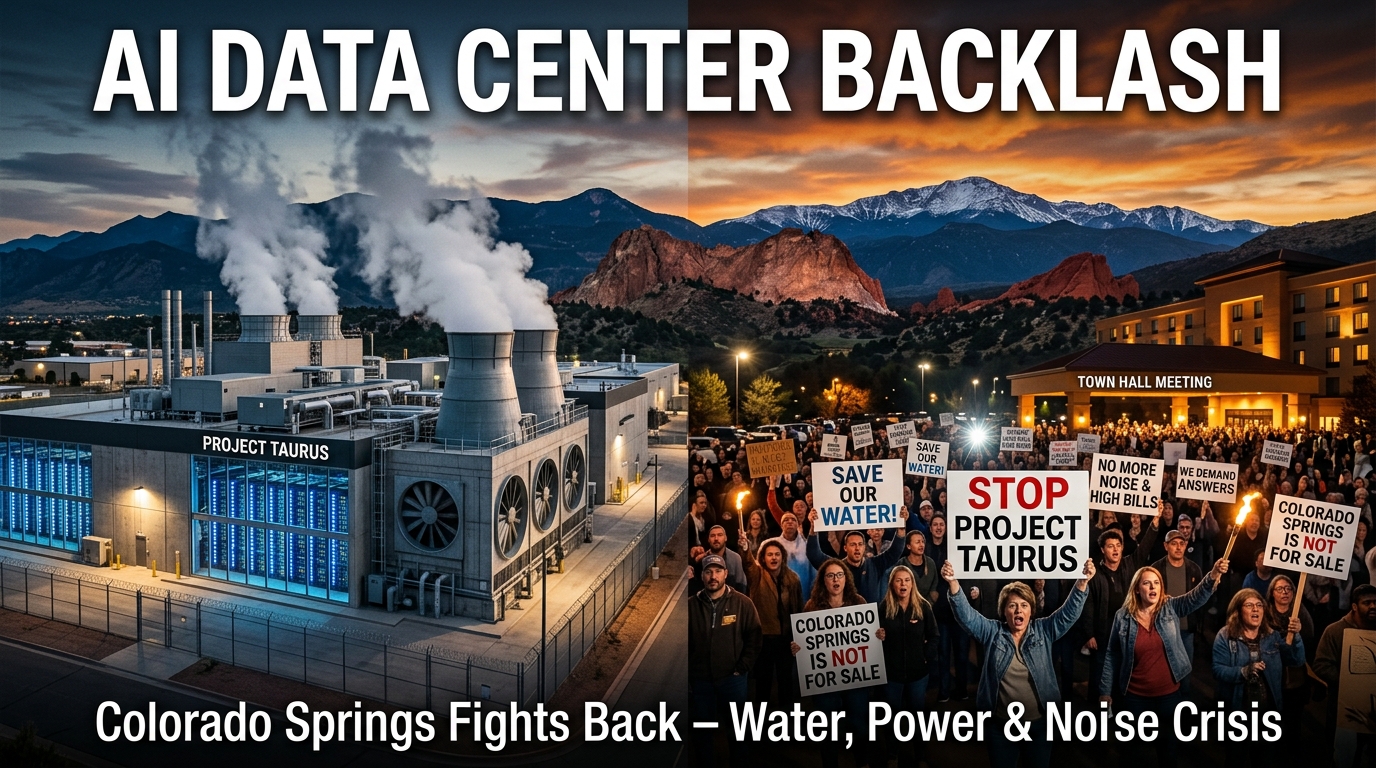
The AI Boom’s Dirty Secret: Why Communities Are Fighting Back Artificial intelligence is everywhere—from Chat GPT to autonomous vehicles—but behind the scenes, it’s powered by enormous data centers that are sparking a nationwide revolt. These hyperscale facilities guzzle electricity, consume millions of gallons of water, generate constant noise, and strain local grids. In 2026, the pushback is louder than ever.
robertbryce.substack.com From proposed moratoriums in Maine to ballot measures blocking projects in Wisconsin, communities are saying “enough.” A recent poll shows 65% of Americans oppose new data centers in their neighborhoods. And right now, one of the hottest flashpoints is Colorado Springs, where a proposed AI data center has ignited fierce community opposition.
axios.com In this post, we break down the AI data center backlash, the real environmental and community impacts, and the latest developments from Colorado Springs’ explosive public meeting. Why AI Data Centers Are Under Fire: The Environmental Toll Data centers aren’t just big warehouses—they’re resource hogs:
- Energy Consumption: A single large facility can use as much electricity as tens of thousands of homes. Nationally, AI-driven demand is projected to drive massive grid upgrades, with some experts warning of higher utility bills for everyone. businessinsider.com
- Water Usage: Cooling systems often evaporate millions of gallons daily. In drought-prone areas like the American West, this is a flashpoint. One analysis warns U.S. data centers could consume water equivalent to 18.5 million households by 2028. coloradonewsline.com
- Noise and Pollution: Backup diesel generators, cooling fans, and 24/7 operations create a constant hum and air quality concerns—especially in residential areas.
- Land Use and Equity: Projects frequently target underserved or industrial zones, raising “data colonialism” questions for Indigenous lands and low-income neighborhoods.
The result? Over $64 billion in data center projects have been blocked or delayed nationwide amid local resistance.
nytimes.com Spotlight on Colorado Springs: “Project Taurus” Sparks Overwhelming Backlash In early April 2026, Colorado Springs became ground zero for the AI data center revolt. California-based developer Raeden proposed turning the old Intel chip fabrication plant at 1565 High Tech Way (off Garden of the Gods Road, near the Chelsea Glen neighborhood) into an AI data center called Project Taurus. The site sits just 300 feet from the nearest homes.
cpr.org On April 7, 2026, the first public meeting at the Hyatt Place on West Garden of the Gods Road drew hundreds of residents. The line wrapped around the building. The fire marshal had to turn people away due to overcrowding. Organizers split the session, and a larger follow-up meeting is now planned.
axios.com Resident concerns were loud and clear:
- Water usage in a state facing record-dry winters and low snowpack.
- Noise pollution from cooling systems and monthly diesel generator tests.
- Rising utility costs and strain on the electrical grid.
- Air quality and environmental impact in an already drought-stressed region.
- Lack of transparency (Raeden won’t name the AI tenant due to NDAs).
Retired Air Force Lt. Col. Mitch White summed it up: “The impact on us will be more than significant … the noise levels, impact on the electrical grid, utilities continue to crank up our rates, and we are in a drought.”
gazette.com Developer’s Defense vs. Community Reality Raeden co-founder Jason Green pushed back, calling the project a retrofit of existing infrastructure:
- Water: Closed-loop system needs only 200,000 gallons initially (roughly four residential pools), then recirculates with no additional draw. (Trade-off: higher electricity for cooling.)
- Power: Starts at 50 megawatts (enough for 20,000–45,000 homes), with Colorado Springs Utilities infrastructure already supporting over 100 MW.
- Noise: Claims the hum won’t exceed 50 decibels—about as loud as rainfall or a refrigerator.
- Jobs: 60–100 permanent positions.
- Rates: City utility officials say the project won’t raise residential bills. cpr.org
Residents weren’t convinced. Many cited past broken promises at the site (previous chip plant and crypto operations) and questioned whether efficiency claims hold up in real-world drought conditions. A Change.org petition for a data center moratorium is already circulating.
reddit.com National Pattern: From Colorado Springs to Coast-to-Coast Revolt Colorado Springs isn’t alone. Similar stories are playing out nationwide:
- Denver is weighing a temporary moratorium on new data centers.
- Maine lawmakers are debating a statewide ban.
- Communities in Maryland, Nevada, Wisconsin, and Missouri have blocked projects via ballots, protests, or council votes.
- Even small towns like Walsenburg, Colorado, are questioning AI infrastructure proposals. coloradosun.com
Environmental groups and labor unions are split in Colorado, with some seeing economic upside and others warning of long-term costs to residents. What This Means for the Future of AI and Your Community The AI data center backlash isn’t anti-tech—it’s pro-sustainability and pro-community. As Big Tech pours hundreds of billions into infrastructure, locals are demanding accountability on water rights, energy costs, noise ordinances, and transparent permitting. Key takeaways for 2026 and beyond:
- Efficiency isn’t enough — Closed-loop cooling and renewable claims must be independently verified.
- Local voices matter — Overflow meetings and petitions are forcing developers and cities to listen.
- Policy is catching up — Expect more moratorium debates, stricter environmental reviews, and utility rate protections.
Ready to Join the Conversation? The fight in Colorado Springs shows that when communities speak up, developers and officials have to respond. Whether you support smart data center growth or demand stronger safeguards, your input matters. What do you think?
Should Colorado Springs approve Project Taurus? Should cities impose moratoriums on new AI data centers until full environmental reviews are complete? Drop your thoughts in the comments below. Share this post if you’re concerned about AI’s hidden costs. Subscribe for more under-the-radar tech and environmental stories. Related Reading:
- Proposed data center in Colorado Springs faces fierce backlash (CPR)
- National tracking of data center rejections (Data Center Watch)
Article discussion